

On June 24, 1527, while pious citizens of Basel gathered around St. John's Eve bonfires along the Rhine, the newly appointed city physician walked out into the cathedral courtyard carrying a thick leather-bound Latin folio. In front of gasping faculty doctors and cheering medical apprentices, Theophrastus Bombastus von Hohenheim, known to Europe as Paracelsus, pitched the reigning medical orthodoxy straight into the embers. His crime against academic decorum was simple: he refused to flatter revered names when the patient on the cot was dying of the standard textbook cure.
Five centuries later, modern tarot tables suffer from the exact same scholastic laziness in miniature. Beginners memorize seventy-eight tidy comfort labels and seventy-eight bogeyman labels: Ten of Cups equals pure bliss; The Tower equals blind catastrophe; The Sun equals guaranteed victory; Four of Swords equals forced stalemate. Paracelsus blew up that binary in three Latin words during his 1538 Third Defense: "Sola dosis facit venenum" ("The dose alone makes the poison"). Lay four Rider-Waite-Smith cards not in a fortune-telling timeline from left to right, but in a strict 2x2 Apothecary Diagnostic Matrix, and every pious card cliché collapses on contact with proportion. An overfed Ten of Cups becomes compulsive harmony-seeking that rots honest boundaries. A stark Tower at the fourth corner becomes clean surgical precision saving the load-bearing masonry underneath.
1. Who Paracelsus Really Was: The Rebel Physician Who Burned the Canon (1493-1541)
Romantic pamphlets paint Paracelsus as a tavern magician muttering over sulfur fumes while searching for philosopher's gold. The historical archive from Switzerland and Austria draws a far saltier portrait: a scarred army surgeon, mining toxicologist, and furious empiricist who trusted miners, midwives, barbers, and metallurgical assayers more than tenured deans reading third-hand Arabic translations in Latin velvet gowns.
Born around 1493 near Einsiedeln in the Swiss canton of Schwyz as Philippus Aureolus Theophrastus Bombastus von Hohenheim, he learned his first chemistry far from library desks. His father, Wilhelm von Hohenheim, an impoverished physician, moved the household in 1502 to Villach in Carinthia, the silver, lead, and quicksilver mining basin of southern Austria. Wilhelm taught medicine at the Fugger family's Bergschule for assaying ores. Before Theophrastus ever debated an Aristotelian syllogism, he watched miners cough up blood from cinnabar fumes, observed smelters test slag beside charcoal crucibles, and recorded occupational lung poisoning firsthand in what became Von der Bergsucht und anderen Bergkrankheiten, Europe's earliest systematic treatise on industrial toxicology.
From roughly 1510 onward he walked across half of Europe: studying briefly at Basel, Vienna, Wittenberg, and allegedly earning a medical doctorate in Ferrara around 1516, though he cared far less for diplomas than for field dressings. He served as an army surgeon in Venetian campaigns, in Denmark, in the Low Countries, and along Baltic trade routes, deliberately seeking out executioners (who knew bone setting and wound anatomy better than university lecturers), bathhouse surgeons, herbalists, and smelter foremen. When scholars mocked his dusty boots, he answered flatly: "The libraries do not walk across the Alps; the diseases do."
Basel, 1527: Curing Erasmus's Printer and Burning Avicenna
His thunderclap came in Basel in late 1526 and 1527. Johann Froben, the finest humanistic publisher north of the Alps and close friend of Desiderius Erasmus, lay crippled with a severely infected leg; Basel's orthodox faculty doctors recommended amputation. Froben sent messengers to Strasbourg for the controversial Swiss empiric. Using targeted internal and topical therapy instead of butcher's saws or reckless bloodletting, Paracelsus saved Froben's foot and restored him temporarily to his presses. Erasmus wrote to him in stiff, fascinated admiration, while Basel's city council promptly appointed Paracelsus municipal physician and university lecturer.
He lasted barely ten months inside the faculty walls. On June 5, 1527, he nailed an extraordinary manifesto in Latin to the university boards promising to purge medicine from the ground up, declaring he would teach not from dead ancients like Galen or Avicenna, but from nature verified through chemical fire and bedside observation. To twist the knife deeper, he delivered his lectures not in ceremonial Latin, but in blunt, vernacular Alemannic German so working barber-surgeons could sit in the front benches beside doctors' sons. On St. John's Eve, June 24, 1527, he tossed a classical medical compendium (traditionally Avicenna's Canon) onto the student bonfire before the Münster courtyard. Within months, after Froben died of a stroke in October 1527 and a cathedral canon stiffed Paracelsus on an agreed medical fee, local magistrates sided with the guild elite. Warned that arrest awaited him, Paracelsus slipped out of Basel by night in early 1528.
He never held an academic chair again. Yet his fourteen remaining years as a wandering provincial author produced the bedrock of modern pharmacology and iatrochemistry: Opus Paramirum (1531), the surgical bestseller Die grosse Wundarznei (Ulm, 1536), and the biting methodological essays of the Septem Defensiones (Seven Defenses, written 1538 in Carinthia). When he died at forty-seven in a humble inn room in Salzburg on September 24, 1541, his estate inventory listed a Bible, a New Testament Concordance, a pocketful of German manuscripts, and almost no silver coins at all. Like Michel de Nostredame across the French border, Paracelsus left behind an instrument rather than a guild temple.
2. Sola Dosis Facit Venenum, the Tria Prima, and the Doctrine of Signatures
Why does a Renaissance toxicologist belong beside a deck of Rider-Waite-Smith tarot cards? Because Paracelsus argued three interconnected structural rules that cure the exact diseases plaguing modern card reading. Look at the three pillars inside the engraved vignettes below:
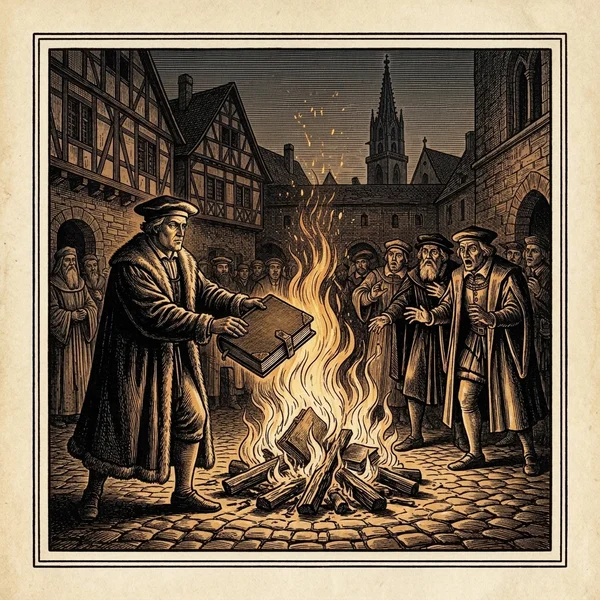
Basel, June 24, 1527 · Bonfire Break
Burn the Little White Book
When Paracelsus flung scholastic orthodoxy into the St. John's Eve fire, his point matched Codex I letter for letter: memorized paper authorities cannot prescribe for a patient you refuse to look at cleanly. A reader reciting keyword manuals without inspecting the spread geometry is practicing academic Galenism in a parlor waistcoat.

Opus Paramirum · Tria Prima
Active Principles Above Static Traits
Orthodox doctors treated bodies as inert bowls holding four passive humors. Paracelsus argued that behind Fire, Water, Air, and Earth (The Four Elements in Tarot) operate three active chemical agencies: combustive Sulfur, volatile mediating Mercury, and fixed structural Salt. Tarot cards likewise name verbs and thresholds under tension, never motionless adjectives.

Septem Defensiones (1538) · Third Defense
The Dose Alone Makes the Poison
Challenged by rivals for using mineral preparations of antimony, arsenic, and mercury, Paracelsus replied cleanly: "Alle Dinge sind Gift, und nichts ist ohne Gift; allein die Dosis macht, dass ein Ding kein Gift ist." Sugar, patience, vigilance, or candor can poison a house once their dose crosses proportion.
Alongside dosage and the Tria Prima, Paracelsus leaned on an older observational rule he called the Doctrine of Signatures (Signatura Rerum). Before any laboratory distillation begins, nature stamps an organism's inward tendency visibly onto its outer rind: leaf shape, bark scarring, mineral crystallization, gait, and skin pallor mirror the unseen mechanism inside. At a Rider-Waite-Smith table, that principle is plain common sense backed by Codex VIII (The Body Language of Tarot). Before inventing deep psychological poetry, look at Position 1 literally. Is the painted figure hunching double under ten wooden staves before reaching town? Is she sitting stiffly blindfolded on cold stone with arms crossed? That literal surface silhouette is the Signatura.
3. Why Dosage Abolishes "Good Card vs. Bad Card" Tarot Thinking
Every reader who has spent ten minutes in online tarot forums knows how quickly superstition sneaks back in through the back door. Nobody admits to fortune-telling in polite conversation, yet the minute a sweet domestic card like Ten of Cups hits the baize, shoulders drop and brains switch off: "Happy ending! Everything is fine!" Conversely, turn up The Tower or Ten of Swords, and beginners whisper condolences as though a bailiff just rang the doorbell.
Paracelsus makes both instincts look childish. In toxicology, oxygen is essential at 21 percent, disorienting at high pressure, and explosive near a spark; digitalis steadies a failing ventricle in micrograms and stops a healthy heart in grams. Nothing inside an apothecary cabinet carries a moral halo stamped on the bottle neck. Position on the reading cloth plays the exact role of milligram weight on a brass scale. What heals when scarce destroys when chronically overdosed; what terrifies inside a banquet hall saves lives in an emergency ward.
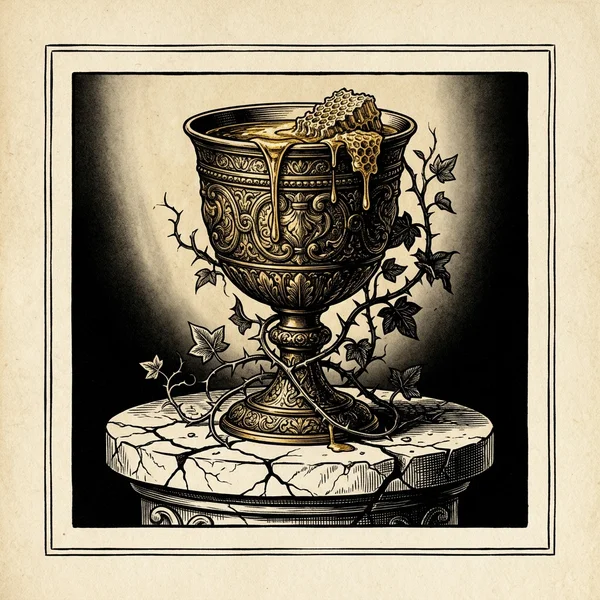
Bright Card at P2: Venenum
Ten of Cups as Toxic Sweetness
Place Ten of Cups inside Position 2 (Venenum), and the rainbow family stops looking reassuring. It exposes compulsive harmony-seeking: buying artificial peace at the dinner table or in an office reorganization by silencing every real objection before anyone speaks up.
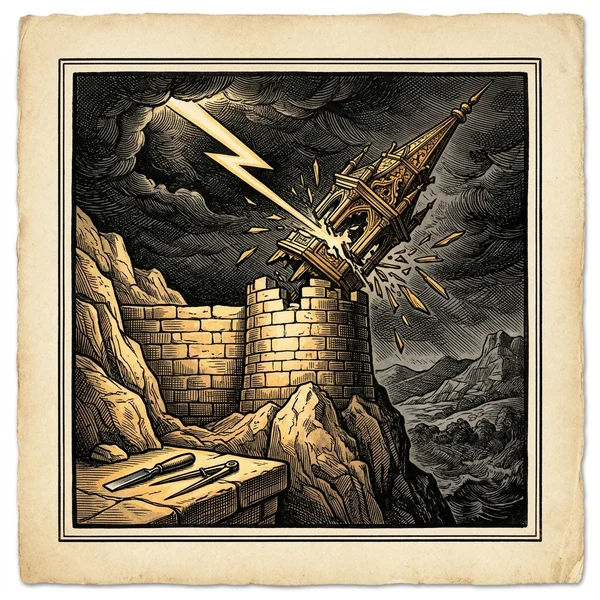
Harsh Card at P4: Surgical Arcanum
The Tower as Clean Scalpel
Drop The Tower into Position 4 (Arcanum), and lightning is no longer a punishment from angry heavens. It becomes targeted demolition: blowing the gilded ornamental crown off a sagging structure before the foundation cracks under dead weight.
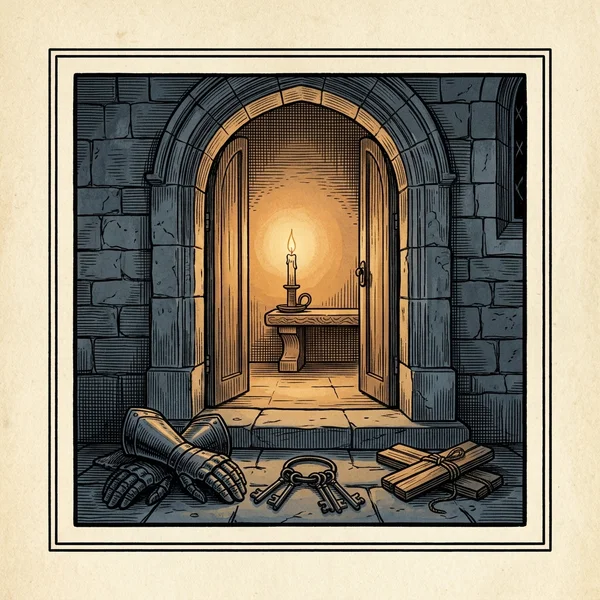
Gentle Card at P4: Decompression
Four of Swords as Measured Cooling
When the Poison at Position 2 is overheated vigilance, tyranny, or nonstop Fire, a quiet card like Four of Swords in Position 4 does not diagnose paralysis. It prescribes mandatory unplugging behind closed doors before the furnace melts its own grate.
Notice how seamlessly Paracelsian dosage interlocks with Codex X: The Reversal Key and our guide on how reversed cards change meaning. Reversal already teaches that an upside-down archetype keeps its domain while bending its valve pressure: blocked, internalized, overdriven, or finally loosening. Position 2 (Venenum) specifically diagnoses the "valve blown off" phenomenon across the whole 78-card deck, upright or reversed alike.
| Card Plate | Naive Parlor Cliché | In Position 2 (Venenum Overdose) | In Position 4 (Arcanum Antidote) |
|---|---|---|---|
| Ten of Cups | Guaranteed bliss and permanent family harmony. | Compulsive Harmony-Seeking: silencing hard friction to keep forced smiles on the porch. | Deliberate Decompression: reunite the circle around shared peace after removing artificial combat. |
| The Sun | Automatic success and boundless radiance. | Forced Optimism & Blinding Exposure: unpriced risk dressed up as sunny enthusiasm. | Catalytic Illumination: pull hidden clauses into unambiguous noon daylight without theatrics. |
| The Emperor | Strong boss, father figure, reliable stability. | Rigid Control & Command Addiction: zero delegation, armored pride, micromanaged hierarchy. | Structural Containment: establish one blunt boundary and assign accountable ownership once. |
| The Tower | Random disaster, ruin, sudden misery. | Compulsive Burning of Bridges: mistaking dramatic wreckage for authentic cleanup. | Surgical Demolition of False Roofs: clean, decisive cut removing unviable structures before rot spreads. |
| Four of Swords | Stagnation, illness, cold withdrawal. | Sanctuary Avoidance: hiding behind endless recovery rituals long after the threat cleared. | Mandatory Sanctuary & Unplugged Rest: cease fighting immediately and shut the chapel door. |
4. Nostradamus vs. Paracelsus: Temporal Sequence Against Structural Dosage
On this site, the two Renaissance four-card spreads operate as deliberate mirror twins. The Nostradamus Spread, explored in full inside our study on Nostradamus prophecies and Tarot quatrains, asks a chronological question: where is a situation heading if nothing breaks stride? Four cards laid left to right compose a ten-syllable quatrain moving from atmospheric climate through active agent and fracture down to aftermath.
The Paracelsus Spread refuses to look down the calendar. When a querent keeps running into the same deadlock across three jobs, two reorganizations, or five years of strained partnership, telling a linear story ("first you worried, then friction came") adds zero diagnostic traction. Paracelsus freezes time and inspects the cross-section of the organism instead: what shows on the skin, what is being over-administered, what bone tissue stays sound, and what counter-reagent restores balance.
| Dimension | The Nostradamus Spread | The Paracelsus Spread |
|---|---|---|
| Historical Anchor | Michel de Nostredame (1503-1566), Salon-de-Provence; Les Prophéties (1555 Lyon editions). | Paracelsus (1493-1541), Basel & Salzburg; Septem Defensiones (1538) & Opus Paramirum. |
| Table Geometry | Linear 1x4 left-to-right verse row mirroring four poetic stanza lines. | Square 2x2 Apothecary Matrix pairing Diagnostic Row, Therapeutic Row, and Dosage Column. |
| Primary Question | "What temporal trajectory, fracture hinge, and remnant outcome is unfolding here?" | "What habit or virtue is currently overdosed, what remains intact, and what counter-dose clears it?" |
| Key Structural Hinge | Central gaze clinch between P2 (Sovereign) and P3 (Fracture) plus P1-to-P4 Premise/Remnant arc. | Top Row (1 + 2), Bottom Row (3 + 4), and vertical cross-tension Dosage Contrast (2 vs. 4). |
| Output Artifact | Century & Quatrain four-line English blank-verse stanza with Book T timing cues. | Folio & Formula diagnostic sheet with Surgical vs. Decompression remedy calibration. |
5. The 2x2 Apothecary Matrix: Four Positions, Three Axes, and 541 Million Formulas

Look carefully at why the board sits in a square rather than a line. In a 2x2 matrix, geography itself enforces relationships the reader cannot fudge. Position 1 sits beside Position 2 along the top edge. Position 3 sits directly below Position 1 and beside Position 4 along the bottom edge. Position 2 hovers straight over the crown of Position 4 down the right column. Every neighbor relationship has a concrete job dictated by apothecary pharmacy:
| Slot & Cell | Latin & English Header | Guiding Question | Strict Reading Rule on the Table |
|---|---|---|---|
| P1 · Top-Left | I. Signatura The Outer Sign |
What is the visible symptom showing up right now? | Read literally and concretely under the Doctrine of Signatures: observable posture, jammed gears, immediate outward friction, never hidden motives. |
| P2 · Top-Right | II. Venenum The Overdose |
What is currently overdosed in this situation? | Never look here for what is missing. Identify what there is too much of: control, optimism, avoidance, analysis, or peace-keeping. |
| P3 · Bottom-Left | III. Substantia The Intact Core |
What is solid and healthy enough to carry a correction? | Sober pharmacy inventory of the stable carrier substance: real assets, proven competence, grounded facts, and undamaged strengths. |
| P4 · Bottom-Right | IV. Arcanum The Antidote |
What precisely dosed intervention neutralizes the poison? | Always read as a concrete, actionable directive: harsh cards act as surgical precision; gentle cards prescribe deliberate decompression. |
Reading the Three Structural Axes
Instead of reading four isolated mini-essays glued together with conjunctions (Codex VII), read the matrix strictly along its three geometric tension lines:
- Diagnostic Axis (Top Row: P1 + P2): How does the active overdose at Venenum generate the visible symptom at Signatura? Check both elemental dignity and 1909 sightlines (how to read gaze direction in tarot cards). If P1 turns facing away from P2 (
‹ › Divergent), the conscious symptom refuses to admit its own fuel source. If P1 points straight into P2 or both cards blaze in reinforcing Fire, the surface strain is visibly fed by the overdose next door. - Therapeutic Axis (Bottom Row: P3 + P4): In pharmaceutical compounding, dropping raw volatile tincture straight onto raw skin burns the patient; a potent active ingredient (Arcanum) requires an inert, trustworthy carrier (Substantia). Position 4 only works because Position 3 is solid enough to bear its weight. Notice who faces whom across the lower bench (cards facing each other and figure distance).
- Dosage Contrast (Right Column: P2 vs. P4): This vertical axis carries the entire diagnostic bite of the spread. Position 2 sits above Position 4 so the reader compares two remedies directly across the elemental table (Codex III) and Golden Dawn decans (Codex VI): wet stagnation cured by brisk ignition, blazing control cooled by quiet Air, or blind euphoria trimmed with level scales.
Deterministic Apothecary Math Across 541 Million Matrices
Just like The Nostradamus Spread, The Paracelsus Spread workbench runs 100% deterministically in TypeScript and local PHP without calling any external language model. Every one of the seventy-eight Rider-Waite-Smith plates stores dedicated entries for Signatura, Venenum, Substantia, and Arcanum, upright and reversed, alongside Book T planetary/decan labels, remedy classification (surgical, decompression, containment, or catalytic), and 1909 gaze vectors across a true 2D coordinate grid. Four non-repeating cards across two orientations yield 78 × 77 × 76 × 75 × 16 = 541,288,896 distinct diagnostic formulas, each hashed reproducibly via SHA-256 into its own Roman ledger citation (FOLIO I-XII · FORMULA I-C) and permanent share link.
6. Three Live 2x2 Paracelsus Cases Decoded at the Table
Abstract rules are cheap until they handle cards actually lying on oak. Inside the Paracelsus workbench sit three worked presets demonstrating the spread's two signature inversions (sweetness turning poisonous; severity turning medicinal) plus a direct frontal standoff across the right column. Open any link below to inspect the live 2D sightline SVG and flip orientations yourself.
Case I: The Over-Sweetened Truce (FOLIO II · FORMULA XC)
The Deal: Top Row: Two of Swords (P1: Signatura, Upright, Air, 1st Decan Libra, gaze BLIND) + Ten of Cups (P2: Venenum, Upright, Water, 3rd Decan Pisces, gaze IN). Bottom Row: Eight of Pentacles (P3: Substantia, Upright, Earth, 1st Decan Virgo, gaze D) + The Tower (XVI) (P4: Arcanum, Upright, Fire, Mars, gaze OUT). Inspect live: /tarot/paracelsus/ef0d3d91ad.
FOLIO II · FORMULA XC · DIAGNOSTIC PROTOCOL
I. [Signatura] Blindfolded on a stone bench with crossed arms holding twin blades dead still.
II. [Venenum] Overdose of compulsive harmony-seeking and silencing honest friction to keep smiles.
III. [Substantia] Proven workman craft, disciplined focus, and seven finished coins already lined up.
IV. [Arcanum] Execute a clean, surgical cut on the rigged structure before rot spreads further.
Ask any naive card-list reader what is happening when Two of Swords precedes Ten of Cups, Eight of Pentacles, and The Tower, and you will hear a tragic soap opera: "Indecision hurts a happy family until your hard work explodes." The 2x2 Paracelsian reading turns that nonsense completely upside down:
Look at the Top Row first (Diagnostic Axis): Two of Swords (Air × Water, Cool / Analytical) shows the visible symptom on the shop floor, not cosmic confusion, just someone literally sitting blindfolded with crossed swords refusing to pick an option while smiling through clenched teeth. Why? Because directly beside her at Position 2 sits Ten of Cups functioning as Venenum: compulsive harmony-seeking. Every blunt truth gets smothered under consensus politeness so nobody upsets the imaginary rainbow over the cottage. Look now at the Bottom Row (Therapeutic Axis, Earth × Fire, Kiln / Instrumental): why can this team survive a brutal cut without collapsing? Because Eight of Pentacles (Sun in Virgo) stands intact on the lower left bench with seven finished, sound coins already staked cleanly beside his mallet. Finally, read the right column vertically (Dosage Contrast: Water × Fire, Contrary / Steam): The Tower (Mars) stares straight OUT at the reader with surgical precision, neutralizing soggy Pisces compliance with one sharp bolt that knocks down only the ornamental gilded crown while leaving the artisan bench standing.
Case II: The Burned-Out Operator (FOLIO X · FORMULA II)
The Deal: Top Row: Ten of Wands (P1: Signatura, Upright, Fire, 3rd Decan Sagittarius, gaze DR right) + The Emperor (IV) (P2: Venenum, Upright, Fire, Aries, gaze OUT). Bottom Row: Queen of Pentacles (P3: Substantia, Upright, Earth, Water of Earth, gaze DL left) + Four of Swords (P4: Arcanum, Upright, Air, 3rd Decan Libra, gaze NONE). Inspect live: /tarot/paracelsus/92d3101a8b.
FOLIO X · FORMULA II · DIAGNOSTIC PROTOCOL
I. [Signatura] Spine bent double under ten heavy sticks, burying sight before reaching town.
II. [Venenum] Overdose of iron control, zero delegation, and micromanaged hierarchy.
III. [Substantia] Grounded practical competence, thriving sanctuary, and calm earthly generosity.
IV. [Arcanum] Cease all fighting immediately, shut the chapel door, and mandate real rest.
Here a textbook "strong card" (The Emperor) turns toxic while an ordinarily gloomy card (Four of Swords) arrives as cool water on a seized engine. On the Top Row, Ten of Wands trudges straight rightward into The Emperor under pure Fire + Fire (Reinforcing) pressure: zero Earth, zero Water in the upper clinic, meaning sheer willpower and top-down micromanagement have fused together into spinal exhaustion. Meanwhile, on the Bottom Row under Queen of Pentacles (Earth), practical reserves, household stewardship, and tangible resources are completely intact: the enterprise is not broke, merely suffocated by command addiction. On the vertical Dosage Axis (Fire × Air), Four of Swords (Jupiter in Libra, gaze NONE) supplies Deliberate Decompression: lay down the armor outside the sanctuary door and step off the clock before another reorganization schedule burns the operator to ash.
Case III: Unpriced Optimism (FOLIO VI · FORMULA XCV)
The Deal: Top Row: Seven of Cups (P1: Signatura, Upright, Water, 3rd Decan Scorpio, gaze IN) + The Sun (XIX) (P2: Venenum, Upright, Fire, Sun, gaze OUT). Bottom Row: The Hermit (IX) (P3: Substantia, Upright, Earth, Virgo, gaze D) + Justice (XI) (P4: Arcanum, Upright, Air, Libra, gaze OUT). Inspect live: /tarot/paracelsus/89f2015487.
FOLIO VI · FORMULA XCV · DIAGNOSTIC PROTOCOL
I. [Signatura] One hand hovers spread beneath seven floating cloud visions without grabbing one.
II. [Venenum] Overdose of naive positivity, unpriced risk, and blinding overexposure.
III. [Substantia] Unclouded discernment, patient endurance, and self-reliant lantern light.
IV. [Arcanum] Audit every clause flatly, balance the scales, and execute one exact surgical cut.
Few decks let The Sun stand accused of anything worse than sunburn. Yet look at the geometry in Case III: Seven of Cups stalls in front of seven contradictory mirages precisely because Position 2 blasts uncritical solar euphoria (Water × Fire steam clouding discernment). Nobody is pricing downside risk because optimism has turned into dogma. Below the smoke, The Hermit holds quiet Virgo patience intact (Substantia), giving Justice solid bedrock to stand on. Look at the vertical Dosage Axis: here both cards stare straight out of the cardboard at the reader (◎ OUT ↕ ◎ OUT) in a direct frontal showdown, Sun's hype against Libra's cold steel ledger and balanced brass scales.
7. Running Your Own Dosage Audit (and Sharing the Formula Card)
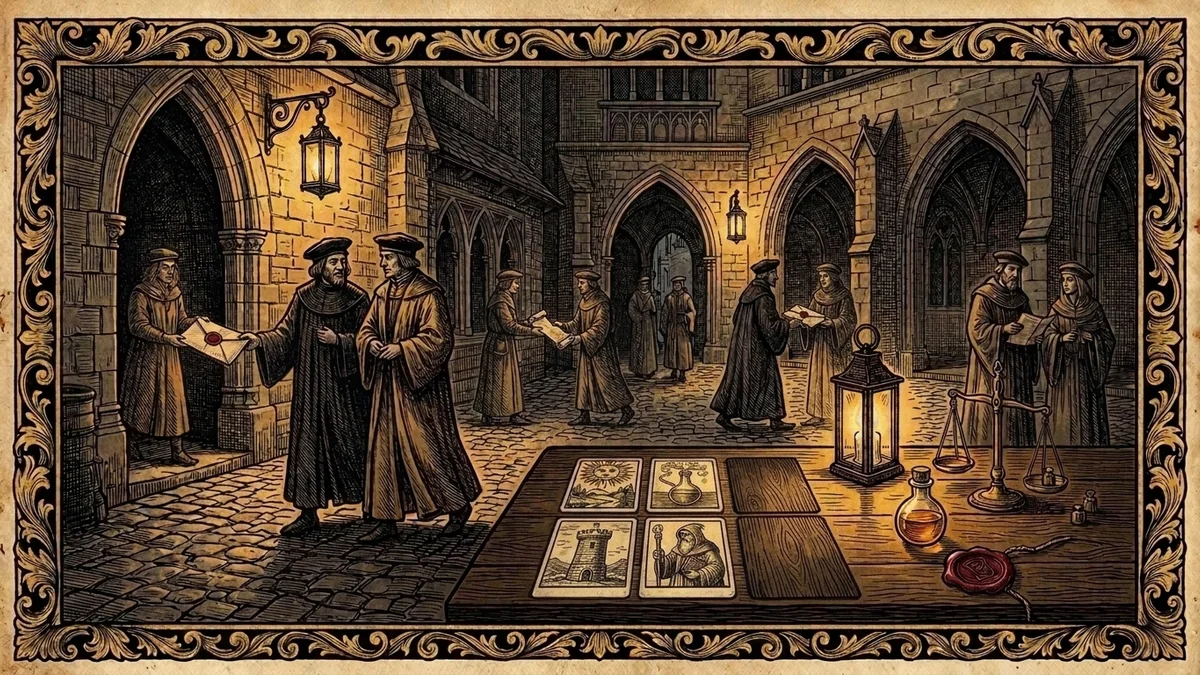
Whether you shuffle pasteboard at a wooden table or open The Paracelsus Spread in your browser, keep your question disciplined before the first card turns. Do not ask vague fortune-teller questions like "Will next month be lucky?" Ask what Paracelsus would have asked beside a sickbed or counting-house ledger (how to compress cards into one sentence):
- Name the Recurring Bottleneck: Frame a concrete situation where effort keeps reproducing the same drag or overcorrection.
- Audit P2 Strictly as Excess: Resist the temptation to treat a sweet card in Position 2 as reassurance or a dark card as bad luck from outside. Ask what habit, standard, or virtue is currently running at 300 percent of healthy operating pressure.
- Test Reversals Against Read Upright: Toggle reversals on when you deal or pick manually, then test the
Read Uprightcomparison switch inside the workbench. Watch how reversing a Venenum card turns external excess into hidden hoarding or blocked calibration, while reversing an Arcanum card warns against half-measured execution. - Export, Pin, or Dispatch the Formula Plate: Once all four cards sit revealed, the deterministic apothecary folio stamps itself with a reproducible permalink, generates a live
1200x630Open Graph share card, exports a crisp3xhigh-DPI PNG matrix or JSON backup, and unlocks 1-click sharing for X, Threads, Bluesky, Reddit, Facebook, Pinterest, WhatsApp, Telegram, and a vertical1080x19209:16 TikTok/Reels poster.
Your Turn at the Apothecary Bench
Measure the Overdose. Isolate the Core. Prescribe the Antidote.
Deal 4 cards fresh on the oak baize, pick cards manually from a physical tabletop spread, or open any of the three worked cases directly in your browser. Zero logins, zero external AI calls, and instant reproducible formula sheets.
8. Frequently Asked Questions About Paracelsus & Tarot Dosage Diagnostics
What does Paracelsus's axiom "Sola dosis facit venenum" actually mean?
Written by the Renaissance physician and alchemist Paracelsus in his 1538 Third Defense ("Alle Dinge sind Gift, und nichts ist ohne Gift; allein die Dosis macht, dass ein Ding kein Gift ist"), it means "The dose alone makes the poison." Almost any helpful substance, habit, or virtue becomes destructive when overdosed, while stern surgical interventions can heal when accurately metered.
How did Paracelsus really live and work between Basel and Salzburg (1493-1541)?
Born in Einsiedeln and raised near the Carinthian mines of Villach, Paracelsus learned metallurgy, occupational lung toxicology, and field surgery hands-on across Europe before curing Basel publisher Johann Froben in 1527. Appointed Basel's city physician, he lectured in plain German rather than academic Latin and threw Avicenna's orthodox textbook into a St. John's Eve bonfire on June 24, 1527, later publishing Die grosse Wundarznei (1536) and Septem Defensiones (1538) before dying in Salzburg in 1541.
Why can a bright card like Ten of Cups or The Sun become toxic in Position 2 (Venenum)?
Position 2 isolates what is currently overdosed rather than what is missing. Under dosage logic, traditionally bright cards expose excessive overcorrections: Ten of Cups reveals compulsive harmony-seeking that suppresses honest boundaries, while The Sun exposes blinding positivity and unpriced risk.
Why do harsh cards like The Tower or Four of Swords heal in Position 4 (Arcanum)?
Position 4 is always read as a concrete, actionable antidote countering Position 2. Harsh cards like The Tower or Ten of Swords deliver clean surgical precision to cut unviable structures, whereas quiet cards like Four of Swords or Temperance prescribe deliberate decompression against rigid over-control.
How does The Paracelsus Spread differ from The Nostradamus Spread?
The Nostradamus Spread lays four cards in a left-to-right linear quatrain to read temporal sequence (Climate, Sovereign, Fracture, Remnant). The Paracelsus Spread arranges four cards in a 2x2 diagnostic matrix linking Diagnostic Axis (P1 Signatura + P2 Venenum), Therapeutic Axis (P3 Substantia + P4 Arcanum), and vertical Dosage Contrast (P2 vs. P4).
Is the Paracelsus Tarot Spread medical advice or connected to external AI?
No on both counts. It is strictly a non-medical, reflective decision and pattern audit rooted in Rider-Waite-Smith visual syntax, and every formula clause, 2D sightline vector, Book T decan note, and Dosage Contrast synthesis runs 100% locally and deterministically without external AI APIs.